
Scalp psoriasis

The scalp and forehead are among the most commonly affected areas in psoriasis. About half of all patients with psoriasis have it there. In this article, you'll learn more about psoriasis on the scalp, also called psoriasis capitis.
How scalp psoriasis shows up
When psoriasis becomes visible on the head and hairline, it can be very distressing. Red, thickened skin and scaling are among the symptoms of scalp psoriasis. Itching can also occur, and because of the scaling, people often feel limited in what clothes they can wear.
In rare cases, scalp psoriasis can lead to hair loss. As a rule, however, the hair loss is not permanent, and the hair grows back once the inflammation has healed. Even so, all these symptoms can seriously limit quality of life and lead to social withdrawal and anxiety.
How psoriasis symptoms develop
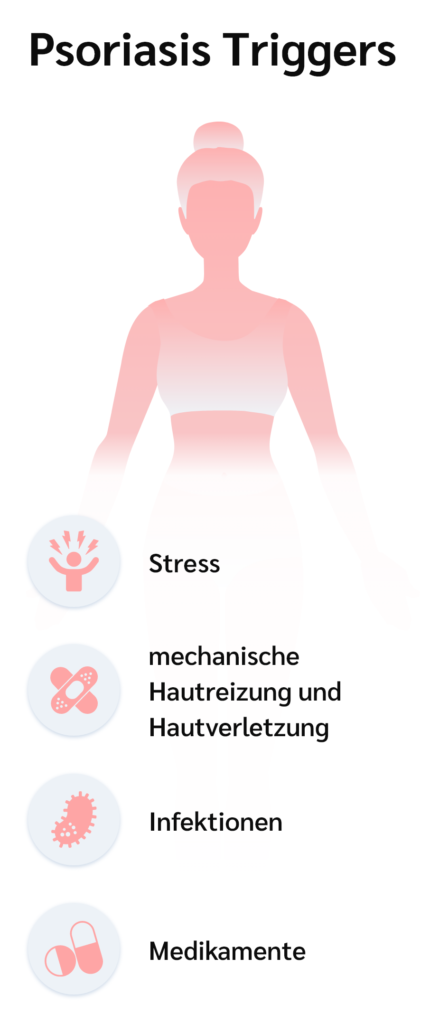
Why psoriasis appears on the scalp has not yet been fully explained. Besides a hereditary predisposition, the following factors in particular can trigger symptoms or make them worse:
- Stress
- Infections
- Medications
- Mechanical skin irritation and skin injury
Which factors play a role can differ from person to person, and it's best to find out for yourself what your personal triggers for your scalp symptoms are. Keeping a diary can be useful here. In it, you can regularly document your skin condition and, over time, recognize links between changes in your skin and the situations that trigger them.
Grading scalp psoriasis
Depending on how pronounced it is, scalp psoriasis can be divided into three levels of severity:
Mild scalp psoriasis: In the mild form of scalp psoriasis, less than half of the scalp is affected, and symptoms are usually limited to itching and red skin. Scaling and skin thickening are only slight.
Moderate scalp psoriasis: Moderate scalp psoriasis looks similar to the mild form, but there may be stronger itching and plaques may form. As with the mild form, less than half of the scalp is affected.
Severe scalp psoriasis: In the severe form, more than 50% of the scalp is affected and the skin is very red. Itching and scaling are among the other symptoms. The skin inflammation is often not limited to the scalp but extends to the hairline or forehead.
Emotional effects of scalp psoriasis
In most cases, scalp psoriasis is not just a medical problem; it can also bring an emotional burden that shouldn't be underestimated. Recurring skin changes, especially in visible places such as the head, can sometimes seriously affect quality of life.
Common consequences are lower self-esteem and higher stress levels, up to anxiety and depression. Since stress is considered a trigger for psoriasis symptoms, it's all the more important to counter this psychological burden. Besides stress management strategies such as relaxation exercises or yoga, patient education programs or self-help groups can also be helpful.
Read more: Treating scalp psoriasis
Sources:
- Ortonne J, Chimenti S, Luger T, Puig L, Reid F, Trüeb RM. Scalp psoriasis: European consensus on grading and treatment algorithm. J Eur Acad Dermatol Venereol. 2009 Dec;23(12):1435-44. doi: 10.1111/j.1468-3083.2009.03372.x. Epub 2009 Jul 15. PMID: 19614856.
- Camela E, Ocampo-Garza SS, Cinelli E, Villani A, Fabbrocini G, Megna M. Therapeutic update of biologics and small molecules for scalp psoriasis: a systematic review. Dermatol Ther. 2021 Mar;34(2):e14857. doi: 10.1111/dth.14857. Epub 2021 Feb 17. PMID: 33559275.
- Wilsmann-Theis D, Bieber T. Psoriasis und Ekzeme am Capillitium [Psoriasis and eczema on the scalp]. Hautarzt. 2014 Dec;65(12):1043-9. German. doi: 10.1007/s00105-014-3542-4. PMID: 25394522.
- https://www.psoriasis.org/scalp/ (external), accessed March 1, 2022
- https://www.healthline.com/health/psoriasis/stress-psoriasis-connection#the-link (external), accessed March 1, 2022