
Tips for skin care
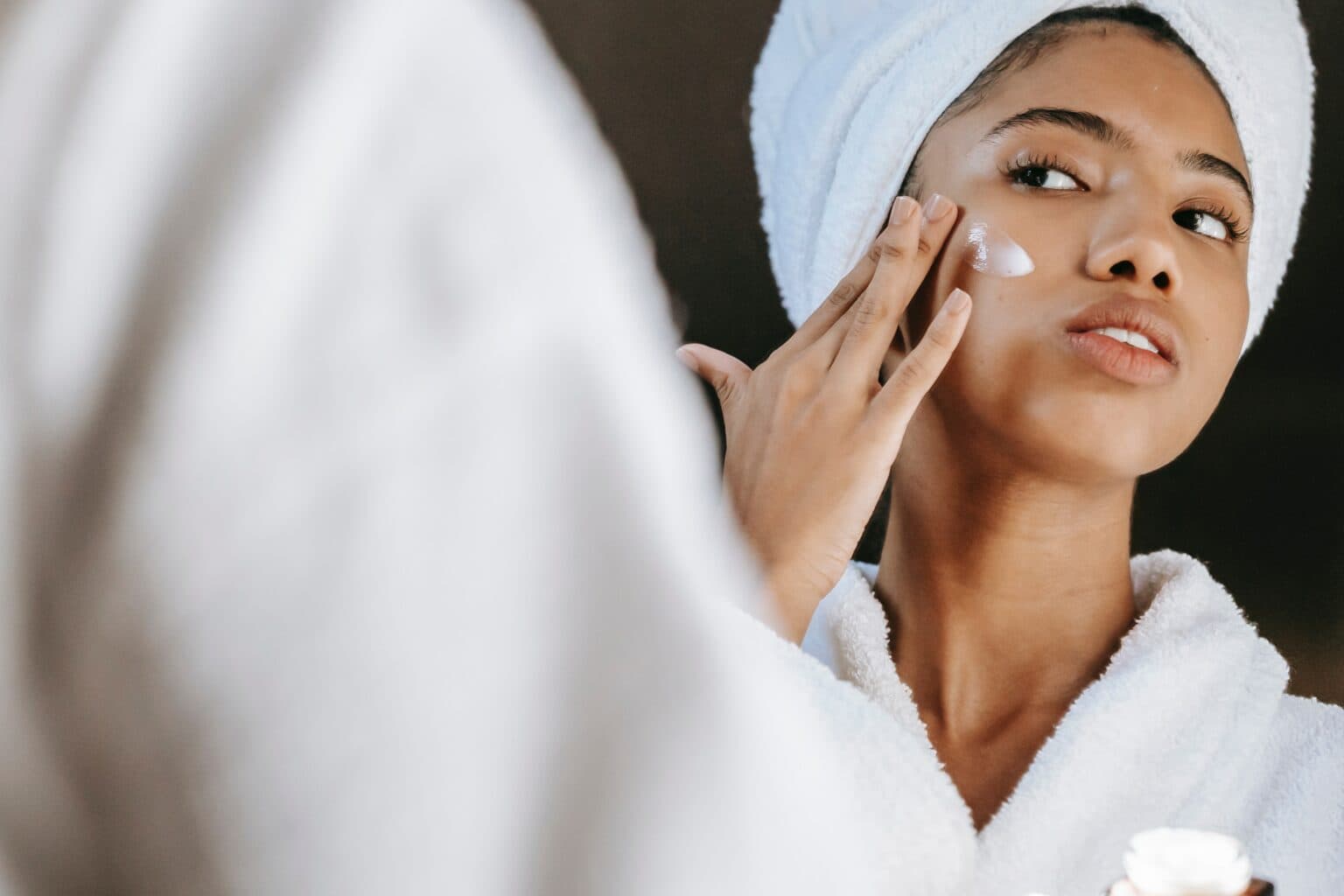
Basic skin care is one of the fundamental measures in treating psoriasis. According to the German S3 guideline, it is a recognized part of treatment at all levels of severity and also during phases without a flare. Used consistently, it can support treatment during a flare and keep the skin supple between flares as well.
Basic skin care includes cleansing the skin, loosening scales and applying moisturizer. With psoriasis, the skin is often dry, and moisturizing regularly helps give it back moisture and oils. It is often recommended to apply basic care once or twice a day, for example after showering or bathing.
Adequate basic care is part of treating psoriasis even in phases with few symptoms. It does not replace any anti-inflammatory treatment that is needed.
Which cream is the right one?
Today there is a wide variety of skin care products with different active ingredients. Which cream to choose depends, among other things, on the current state of your skin, the areas of the body affected and the time of year. The article Cream, ointment, lotion: what's what? explains the differences between creams, ointments and lotions.
State of your skin: Skin during an acute flare needs different care and active ingredients than skin in a phase without a flare.
Area of the body: Skin differs depending on where it is on the body. On the face or in the intimate area it is particularly thin and sensitive, while the palms have thicker skin and can tolerate creams that would be unsuitable for the face, for example.
Time of year: When it is very warm in summer and you sweat a lot, very greasy skin care products are often not suitable. Heat can build up under the grease and irritate the skin. Creams and lotions with a higher water content are better then.
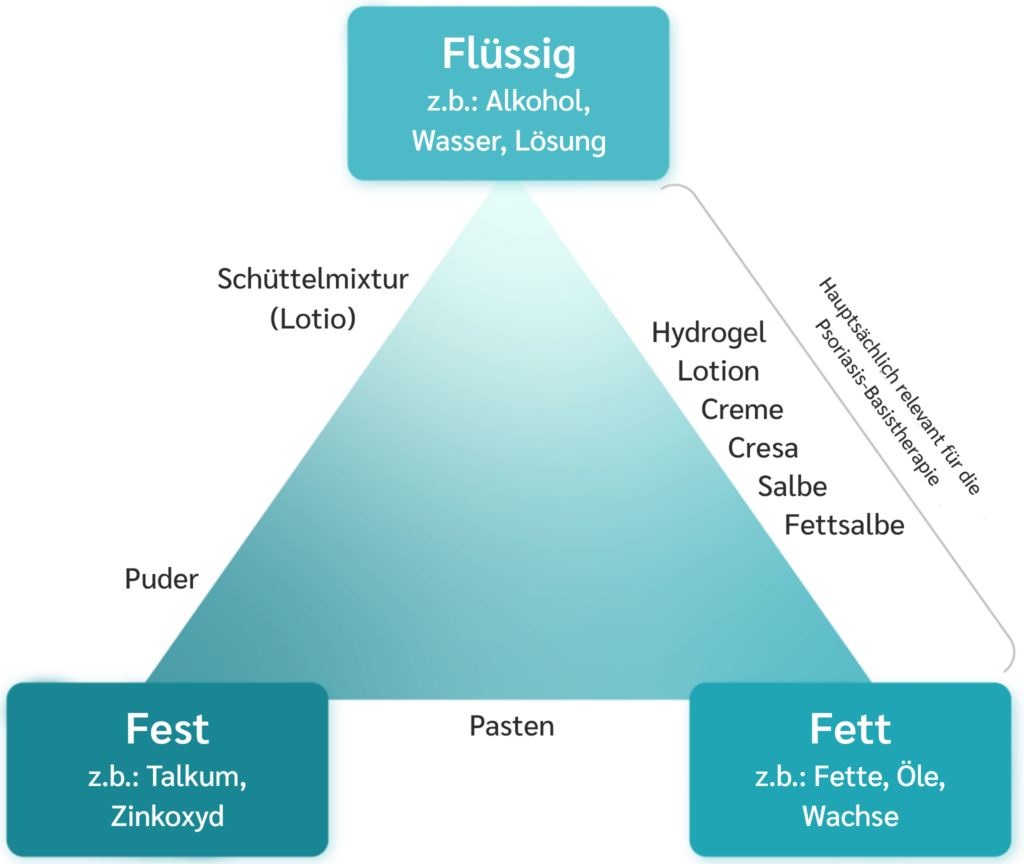
Mild, oil-replenishing skin care products without fragrances or dyes are usually well suited to skin with psoriasis. According to the German S3 guideline, basic therapy includes not only creams and ointments without active ingredients but also preparations containing urea or salicylic acid. Urea can bind moisture in the skin, and salicylic acid helps loosen scales. However, salicylic acid is not suitable for every situation, for example not for young children or for large areas of skin. So ask your dermatologist which active ingredients are right for you.
How is skin care best applied?
There are also a few tips for applying basic care so that the products can work well.
- Wash your hands thoroughly before applying cream.
- Don't take ointments and creams out of jars with your fingers; use a clean spoon or spatula instead.
- Apply the cream in circular motions with your whole palm.
- Be especially careful to apply cream to red, inflamed areas of skin.
- Wash your hands after applying cream, especially after products containing cortisone.
Apply skin care gently and avoid scratching or forcibly removing scales. Skin injuries can trigger new psoriasis patches in the same spot. This is known as the Koebner phenomenon.
If you have questions about how to apply it correctly, talk to your dermatologist or ask at your pharmacy. Used regularly, basic care can help your skin feel more comfortable overall.
Sources
- Deutsche Dermatologische Gesellschaft (DDG) et al.: S3-Leitlinie „Therapie der Psoriasis vulgaris“, AWMF-Registernummer 013-001, 2025, Appendix A (Kapitel Basistherapie) (in German). register.awmf.org/de/leitlinien/detail/013-001
- Jacobi A, Mayer A, Augustin M: Keratolytics and emollients and their role in the therapy of psoriasis: a systematic review. Dermatology and Therapy, 2015. doi.org/10.1007/s13555-015-0068-3