
Effects of mindfulness and meditation on psoriasis
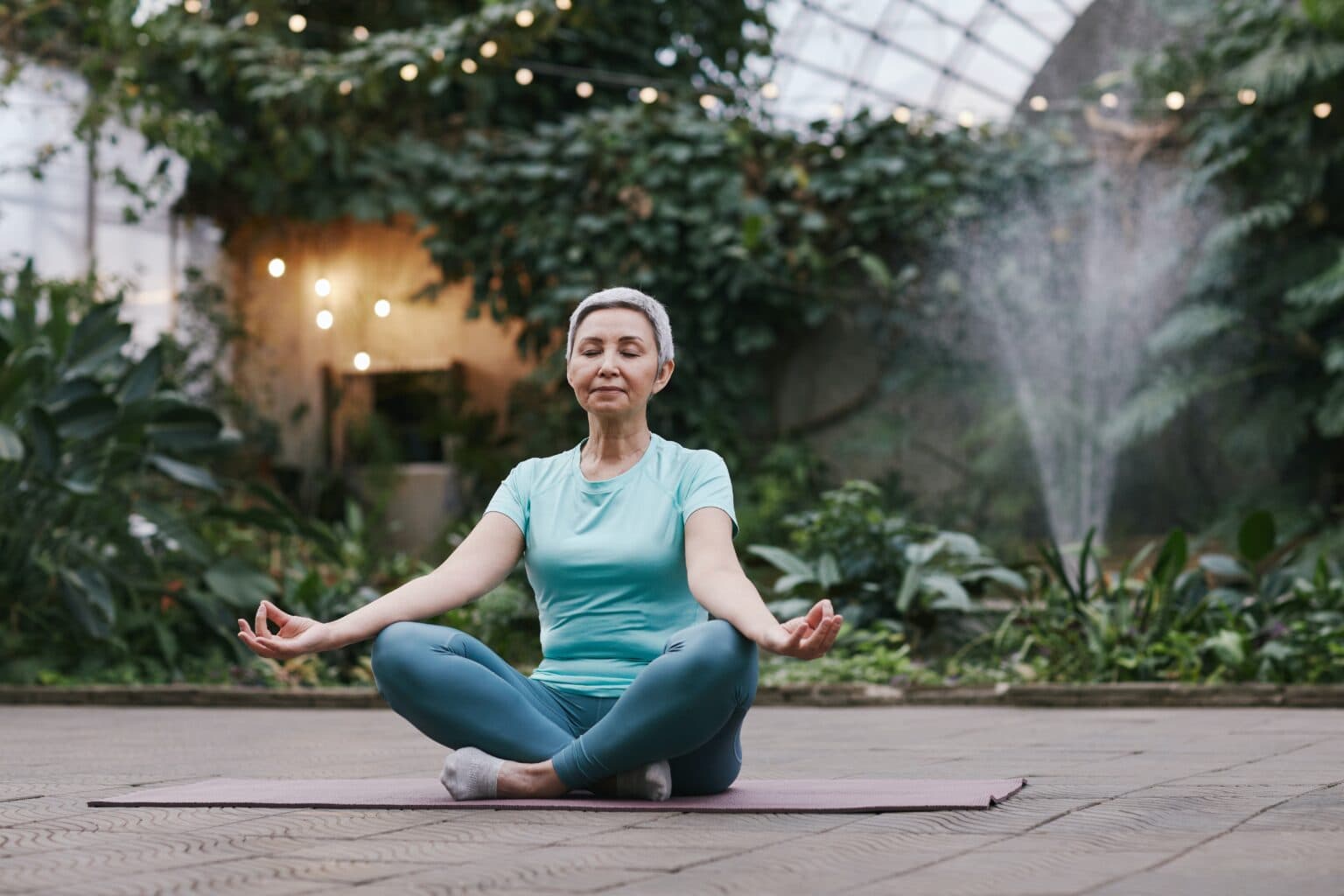
Psoriasis is a chronic inflammatory skin condition, and stress is a common trigger for flares. Here we look at whether ways of reducing stress can have an effect on your skin. Many people already use meditation and mindfulness to cope better with stress. But what does mindfulness actually mean?
Mindfulness is about noticing your surroundings, thoughts and feelings without judging them
The term mindfulness was coined by the biologist Jon Kabat-Zinn in the 1970s. The underlying teaching, however, is much older and, like meditation techniques, comes from Buddhist culture. Mindfulness means being consciously aware of yourself and your surroundings. In mindfulness-based meditation, for example, you focus on your breathing. You notice the thoughts that come up, but you let them pass. In everyday life, mindfulness means, for example, that when you eat an apple, you focus only on that and block out everything else. First you take a close look at its color, then you taste the apple on your tongue and notice its smell.
Mindfulness and meditation for psoriasis
In the scientific review presented here, the authors looked at the study results available so far on how meditation and mindfulness affect patients with psoriasis. They examined the effect on
- psoriasis symptoms,
- severity and
- quality of life.
All of the studies that were evaluated looked at mindfulness and meditation as a complementary therapy alongside existing drug treatment in patients with moderate to severe psoriasis.
What did the studies find?
After a systematic literature search on the question, the authors of the review were able to include nine suitable publications in their analysis. In total, 356 patients with psoriasis were studied. In five out of six studies, meditation and/or mindfulness had a positive effect on the course of the disease. This means that the patients noticed a decrease in severity and in the course of their disease. However, the authors of the review call for further studies to actually confirm this result. Their reason is that the studies only looked at short periods of 8 or 12 weeks, so nothing can be said about the long-term effects of meditation and mindfulness. In addition, the methods used in the studies were not completely identical (length and number of meditation/mindfulness sessions; meditation technique), which makes them hard to compare.
The results suggest that mindfulness and meditation may improve symptoms and quality of life, but this has not yet been proven. If you would like to bring more mindfulness into your life, you could start, for example, by avoiding multitasking so that you focus on just one thing, but with all your senses. That could be dinner or a good conversation. It often helps just to put your phone down and turn off the TV.
Or to start the day with a few conscious breaths. It doesn't always have to be an hour-long meditation right away. Small steps add up in the end too, so just give it a try.
Sources
- Bartholomew E, Chung M, Yeroushalmi S, Hakimi M, Bhutani T, Liao W. Mindfulness and Meditation for Psoriasis: A Systematic Review. Dermatol Ther (Heidelb). 2022 Oct;12(10):2273-2283. doi: 10.1007/s13555-022-00802-1. Epub 2022 Sep 14. PMID: 36103011; PMCID: PMC9515248.
- Kabat-Zinn J, Wheeler E, Light T, Skillings A, Scharf MJ, Cropley TG, Hosmer D, Bernhard JD. Influence of a mindfulness meditation-based stress reduction intervention on rates of skin clearing in patients with moderate to severe psoriasis undergoing phototherapy (UVB) and photochemotherapy (PUVA). Psychosom Med. 1998 Sep-Oct;60(5):625-32. doi: 10.1097/00006842-199809000-00020. PMID: 9773769.
- Ludwig DS, Kabat-Zinn J. Mindfulness in medicine. JAMA. 2008 Sep 17;300(11):1350-2. doi: 10.1001/jama.300.11.1350. PMID: 18799450.